The secret behind the enduring appeal and resilience of bespoke oak buildings lies in the timber itself. Selecting the correct type of oak is a critical decision that impacts the lifespan, beauty, energy efficiency, and function of everything from garden rooms and garages to impressive homes and oak framed carports. To truly maximise your investment, you must understand the types of oak timber used in bespoke oak buildings, how different choices perform, and precisely how to choose the best oak timber for construction projects, both new builds and restoration.
Below, discover a comprehensive guide covering the technical strengths, sustainability, grading, and modern uses of oak timber in today’s finest timber frame buildings and oak frame construction projects.
Why Oak Is the Preferred Choice for Timber Frame Buildings
Oak has been favoured for centuries for its combination of beauty and unbeatable structural performance. Its naturally high density, visible grain, and resistance to decay are perfect for the climate in the UK and across Europe. Oak endures for generations and gracefully develops a characteristic silver patina outdoors, making it a top pick for both architects and families seeking permanence in their property investments.
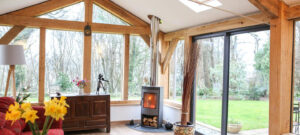
Modern timber frame construction continues to rely on oak because it supports wide spans, beautiful vaulted ceilings, and open designs, giving homeowners ultimate freedom in layout and glazing. Oak also pairs well with other sustainable building approaches, helping to create energy-efficient, breathable, and healthy living environments.
Types Of Oak Timber Used In Bespoke Oak Buildings
To ensure your building delivers on longevity and style, it’s vital to select the right species and grade of oak. In the UK and Europe, the most commonly used oaks are:
European Oak (Quercus robur & Quercus petraea)
European oak, including English, French, and Eastern European varieties, forms the backbone of timber frame buildings in Britain. Known for its durability, straight grain, and attractive pale hue, European oak is well-suited to visible frames, exposed beams, and external applications.
- Pedunculate Oak (Quercus robur) and Sessile Oak (Quercus petraea) are both tough, slow-grown trees with high tannin levels, leading to natural rot and insect resistance.
- French and Eastern European oaks are often used for longer, straighter beams required in large bespoke oak buildings.
English/British Oak
Slightly shorter and often more robust than their European counterparts, old-growth British oaks are still prized for conservation and restoration of historic timber frame buildings. These can be more difficult to obtain in large, defect-free sections for new construction, but they offer exceptional character in smaller applications.
Green Oak vs. Air-Dried and Kiln-Dried Oak
- Green Oak is freshly felled timber with relatively high moisture content. It is easier to work and will shrink and develop natural splits (“checks” or “shakes”) as it dries. Green oak is the standard choice for frame construction where movement is anticipated and not problematic.
- Air-Dried Oak has less moisture than green oak. Air drying reduces shrinkage and movement, making it suitable for projects where dimensional stability is vital, such as window frames, doors, and joinery.
- Kiln-Dried Oak has a very low moisture content, ideal for interior joinery and furniture but less commonly used for main structural timbers in larger buildings.
How To Choose The Best Oak Timber For Construction
The best approach to choosing oak for your project involves four main considerations: longevity, style, structural needs, and sustainability.
1. Assess Your Building Type and Exposure
- For open, large-span frames or oak framed carports, select high-quality, straight-grained green or air-dried European oak for maximum stability and weather resistance.
- For high-visibility interior joinery, consider quarter-sawn timber for decorative ray flecking and reduced warping.
2. Understand Grading and Sourcing
Oak for timber frame construction is visually graded under British and European standards, with categories like ‘prime’, ‘character’, and ‘structural’ indicating knot frequency and straightness. Reputable suppliers offer full provenance, as local, certified sourcing supports responsible forestry. Buying well-graded oak ensures fewer natural defects and a cleaner finish for exposed elements in your bespoke oak buildings.
3. Select the Right Degree of Seasoning
- Green oak is best for major structural frames, allowing graceful shrinkage and settling over time.
- Use air-dried or kiln-dried oak for precision joinery, window surrounds, or where movement could affect finishes.
4. Match Oak to Intended Use
- For oak framed carports, garage frames, or outdoor rooms, durability trumps all, European green oak is often favoured for its weather resistance and strength.
- In high-detail interior work, prioritise attractive grain and matching colour across boards.
Timber Frame Construction: Detailing for Durability
Full timber frame buildings rely on centuries-old joinery techniques, like mortise and tenon joints, often enhanced with modern steel connectors for additional support. Choosing the right oak type and grade ensures your structure will last for generations with minimal maintenance, especially when protected with appropriate finishes or used in combination with well-designed insulation and weatherproofing systems.
Modern oak frame construction allows innovations such as large glazed panels, open-plan layouts, and integration with passive house principles, all underpinned by strong, reliable oak beams.
Oak Framed Carports and Outbuildings
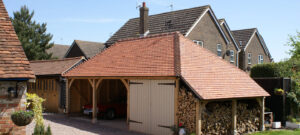
Specialised applications, like oak framed carports, benefit from the resilience of green European oak. These structures endure year-round weather and support heavy loads with ease, making them ideal for garages, carports, and outdoor pavilions. Using premium, appropriately graded oak in these applications provides the best value over time, minimising warping, rot, or pest issues even in harsh conditions.
Sustainability and Future-Proofing
Sustainability is crucial in modern bespoke oak buildings. Working with certified, responsibly managed oak forests reduces your building’s carbon footprint, supports healthy woodlands, and ensures long-term future supply. Oak’s incredible longevity, when paired with thoughtful design and construction, means fewer replacements and less environmental impact over the lifespan of your timber frame building.
Conclusion
The right choice of oak timber makes all the difference in durability, appearance, and value for bespoke oak buildings and major undertakings like timber frame buildings or oak framed carports. Understanding types of oak timber used in bespoke oak buildings and knowing how to choose the best oak timber for construction ensures a resilient, beautiful, and sustainable investment.
By sourcing prime, well-graded oak appropriate for its purpose and embracing proven construction techniques, you create a timber frame structure that will last, and inspire, for generations.